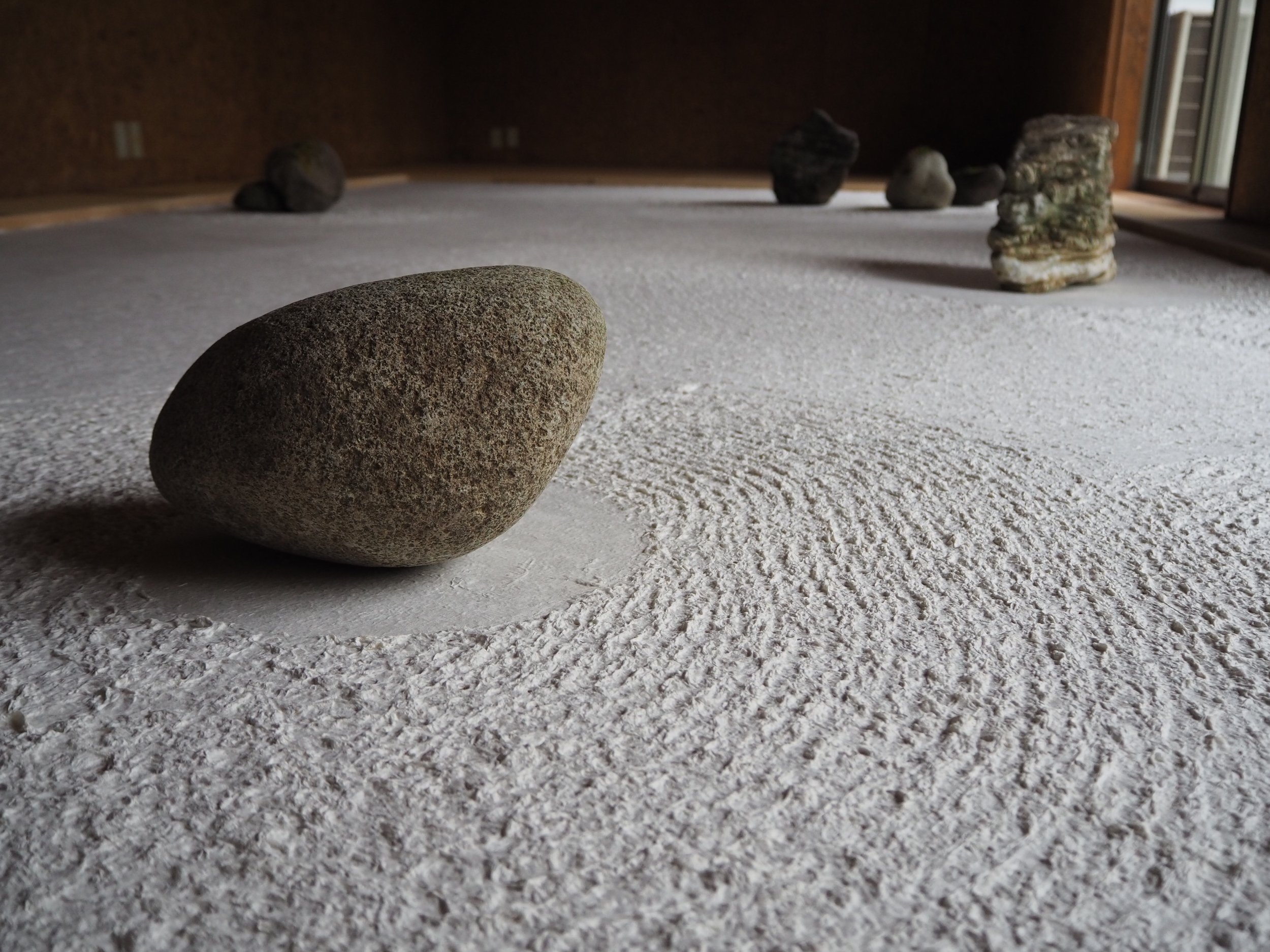
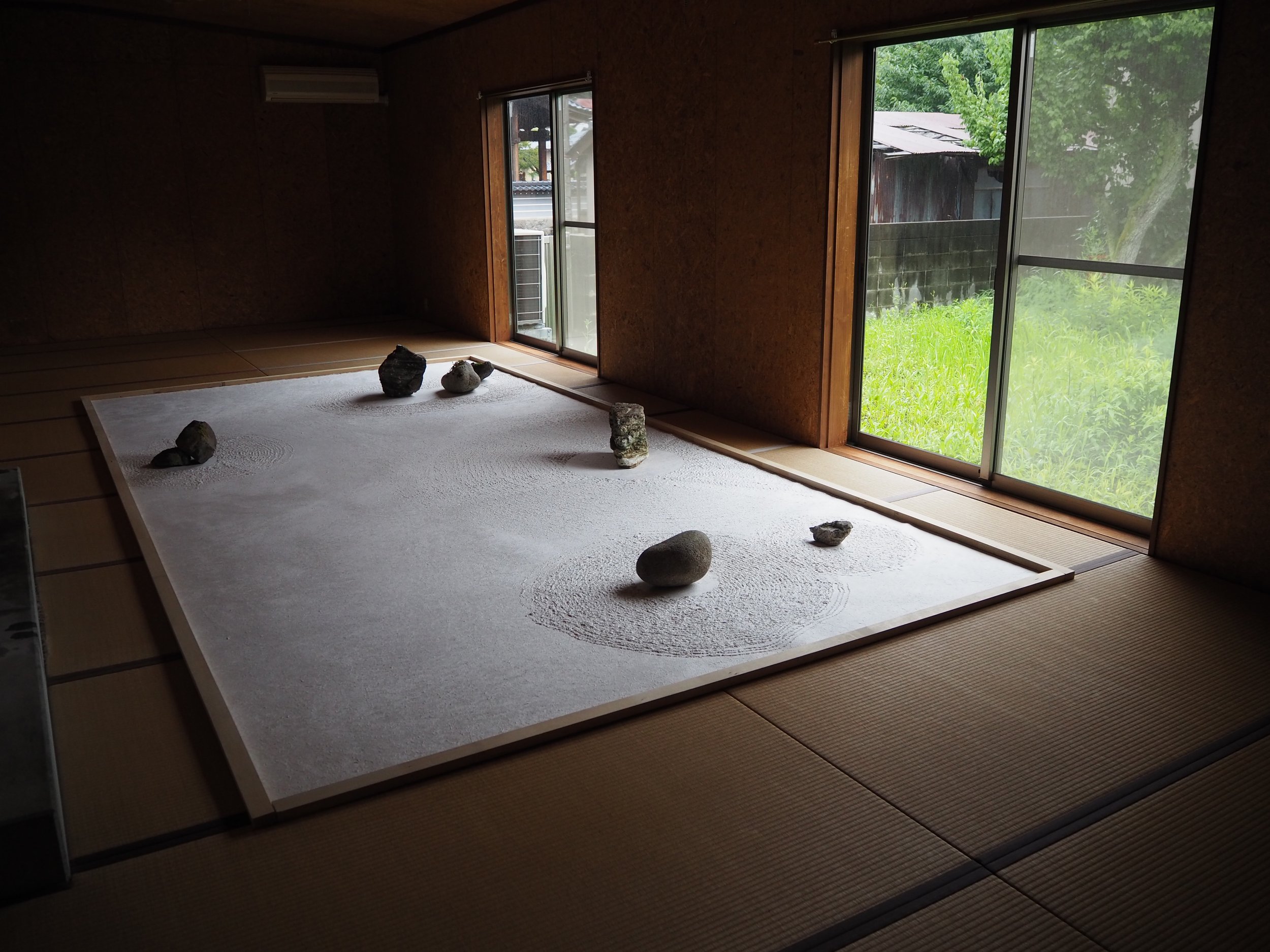
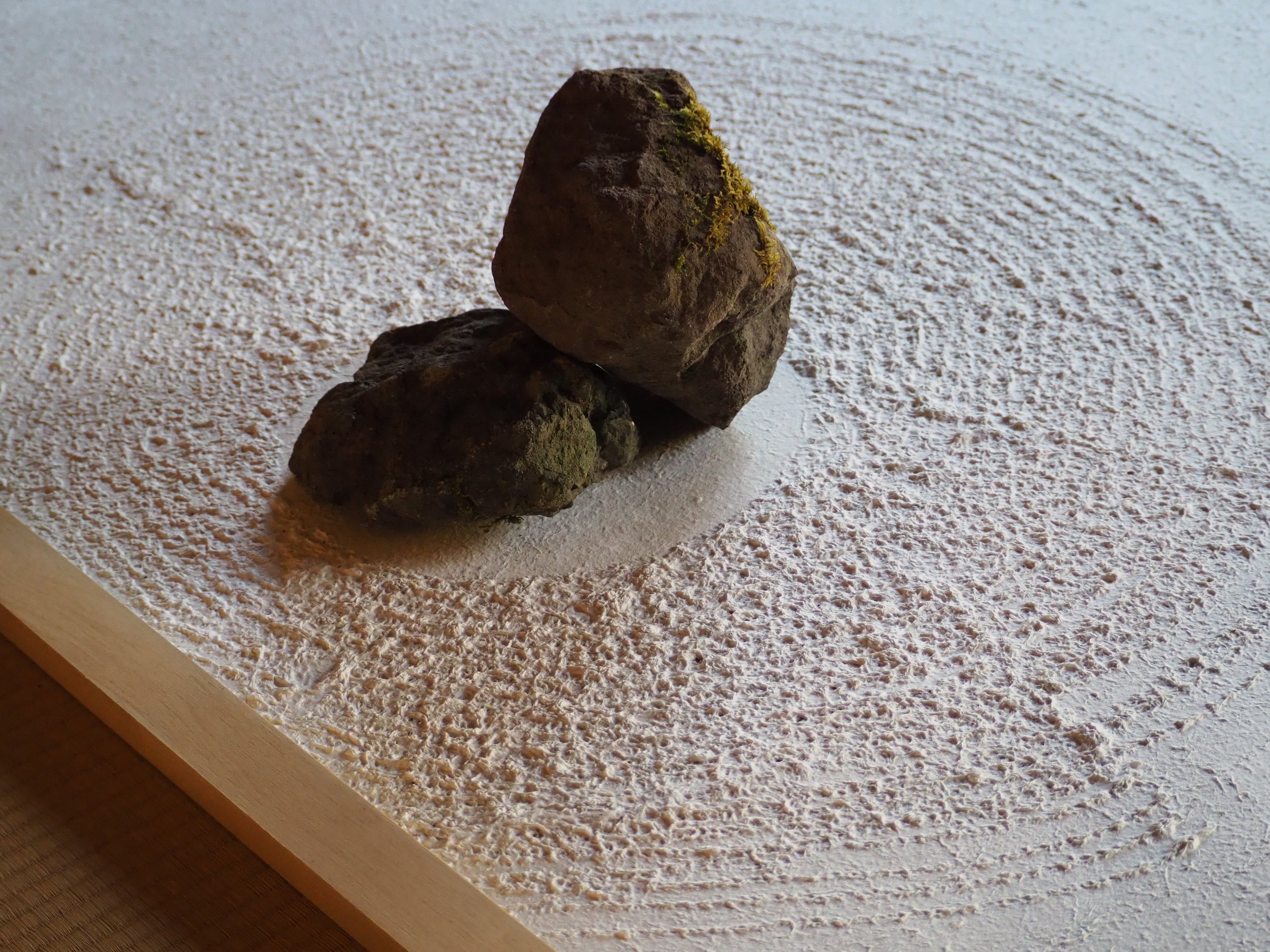
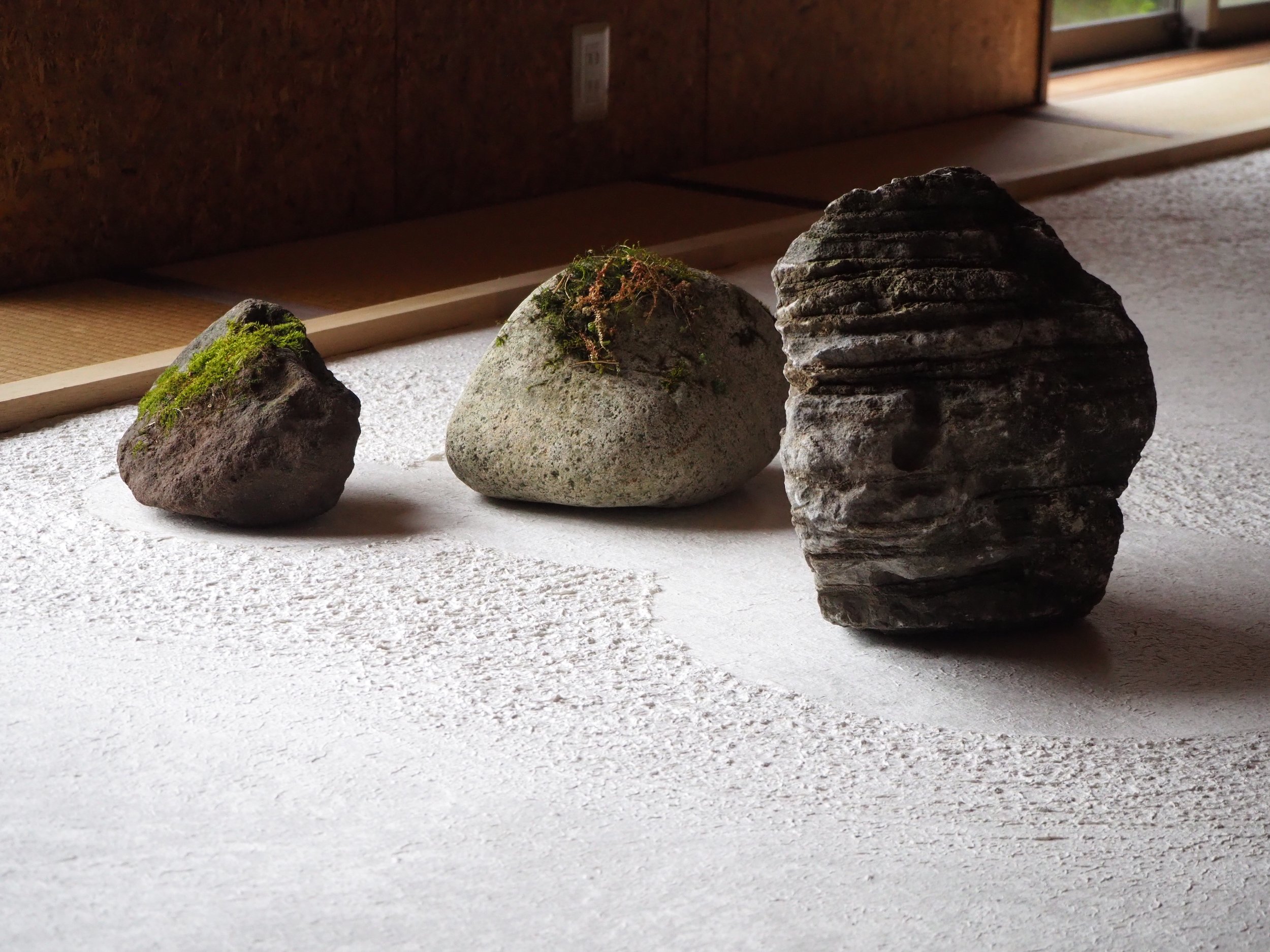
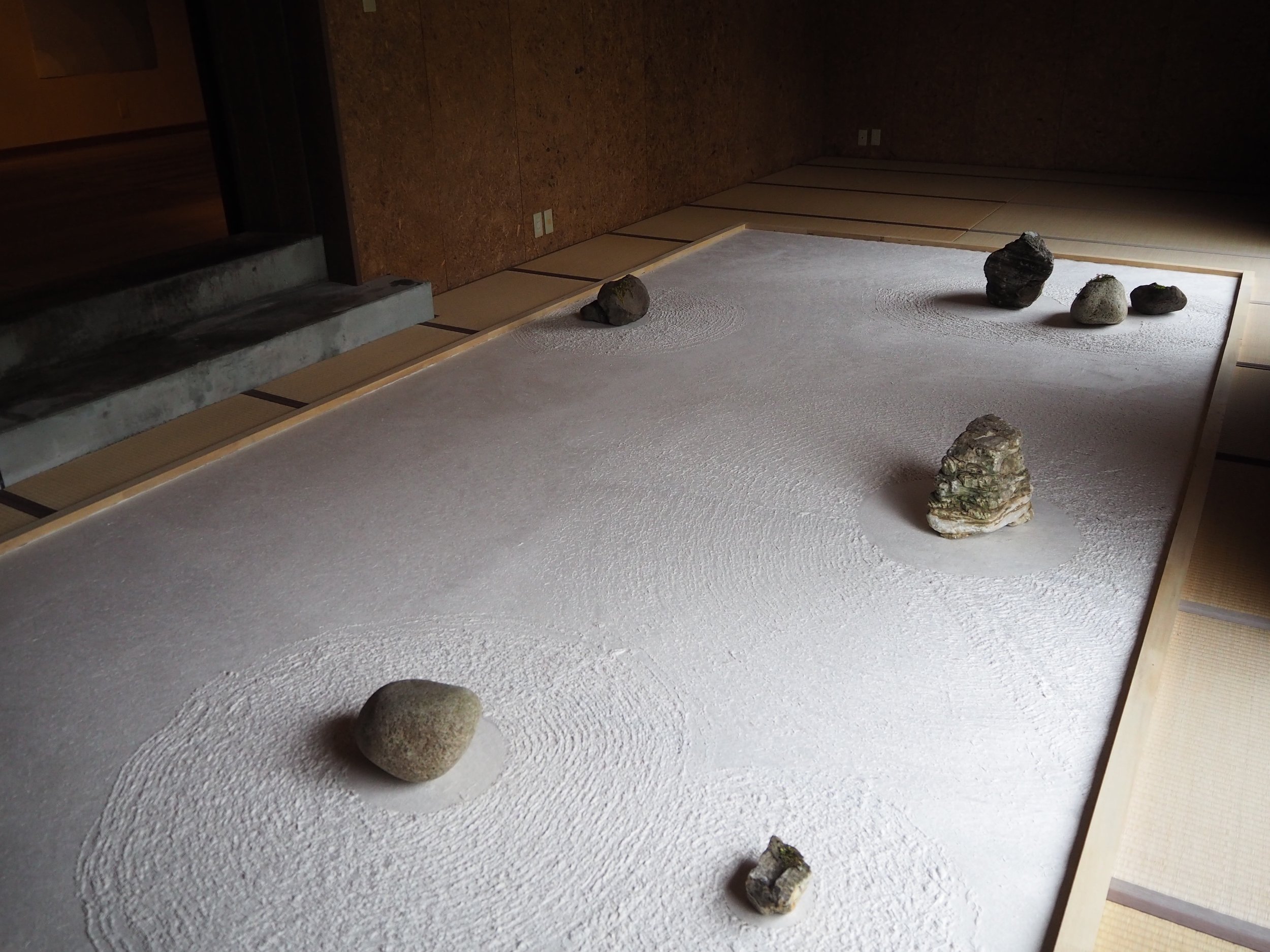
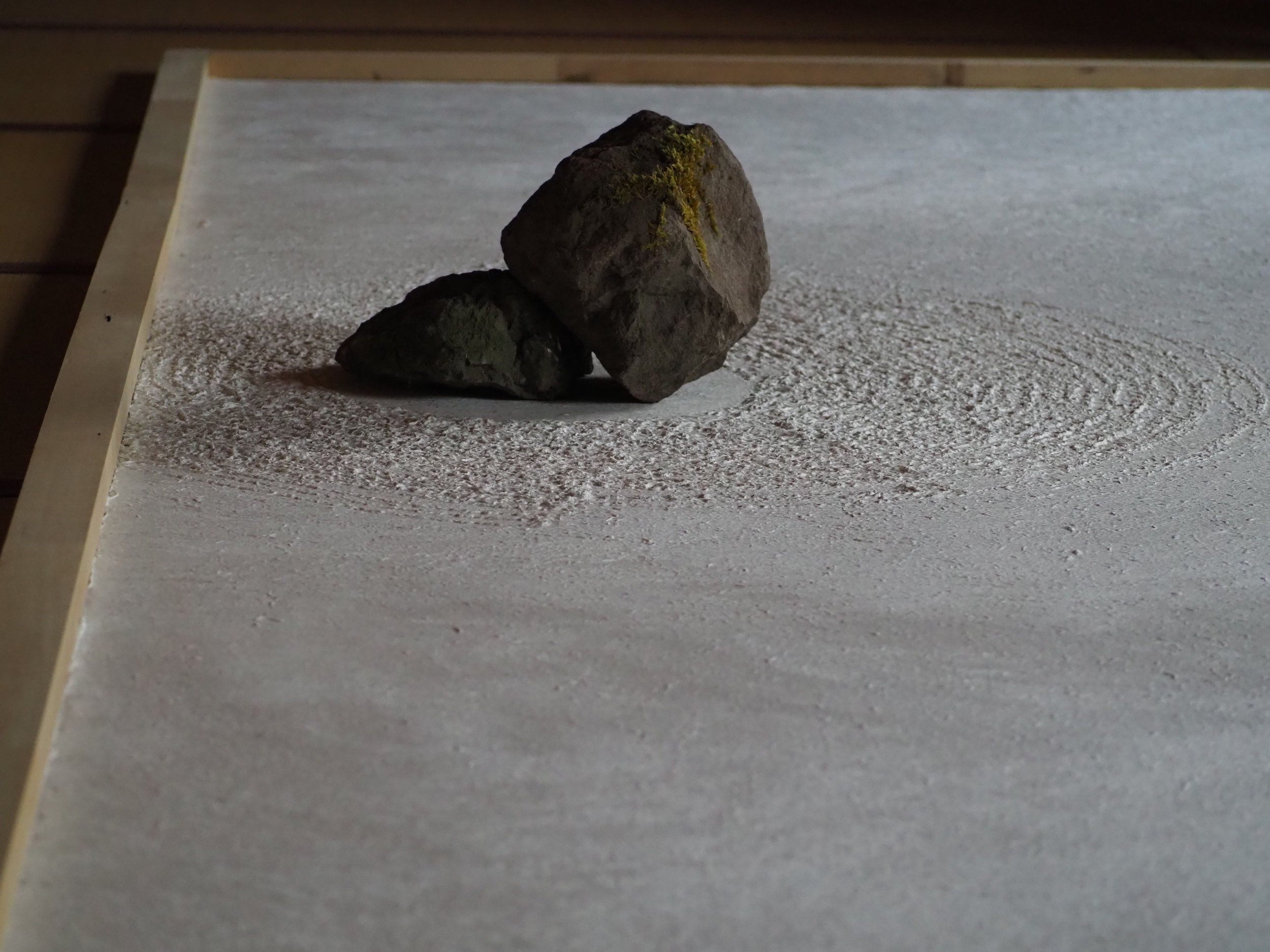
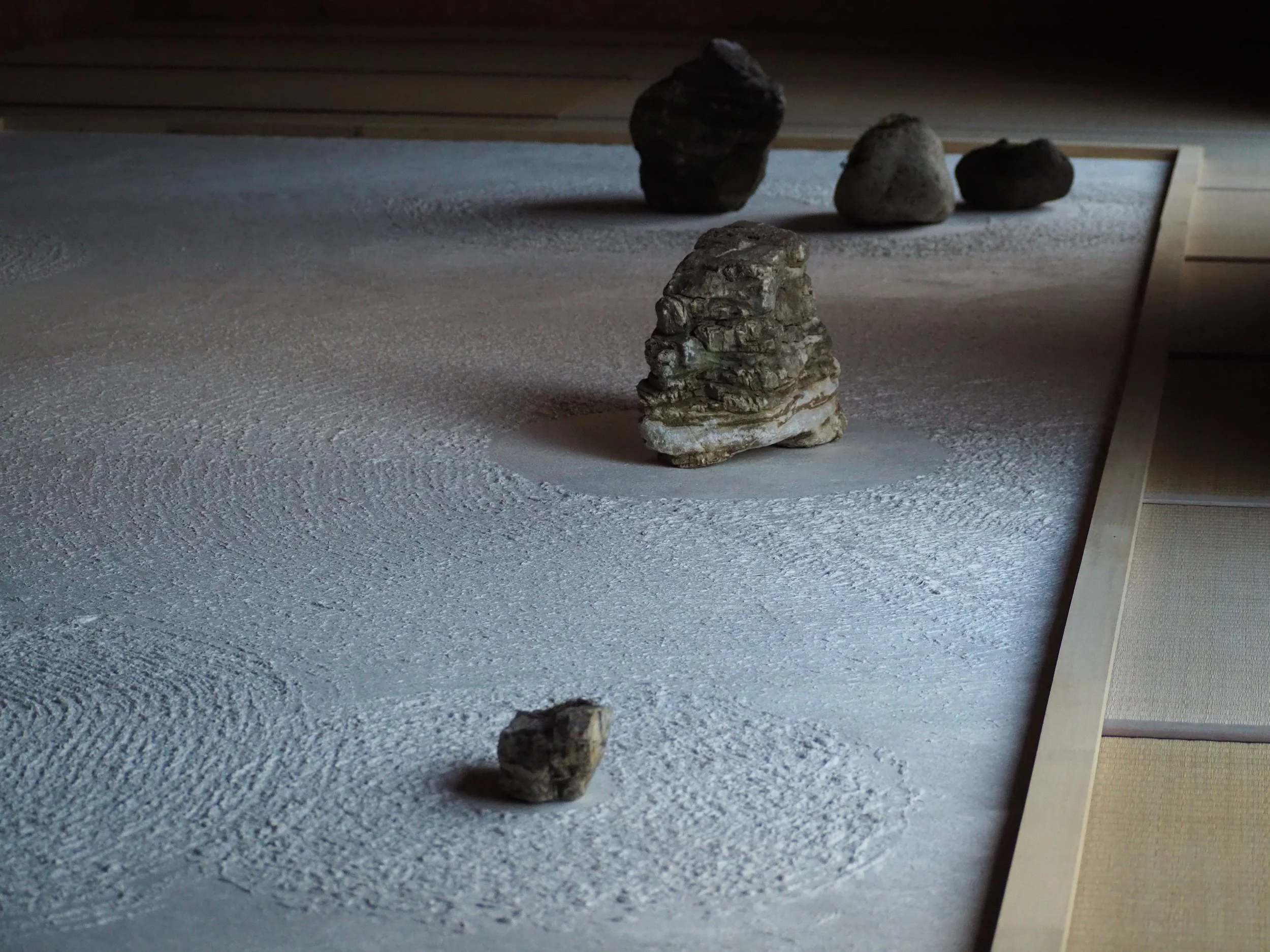
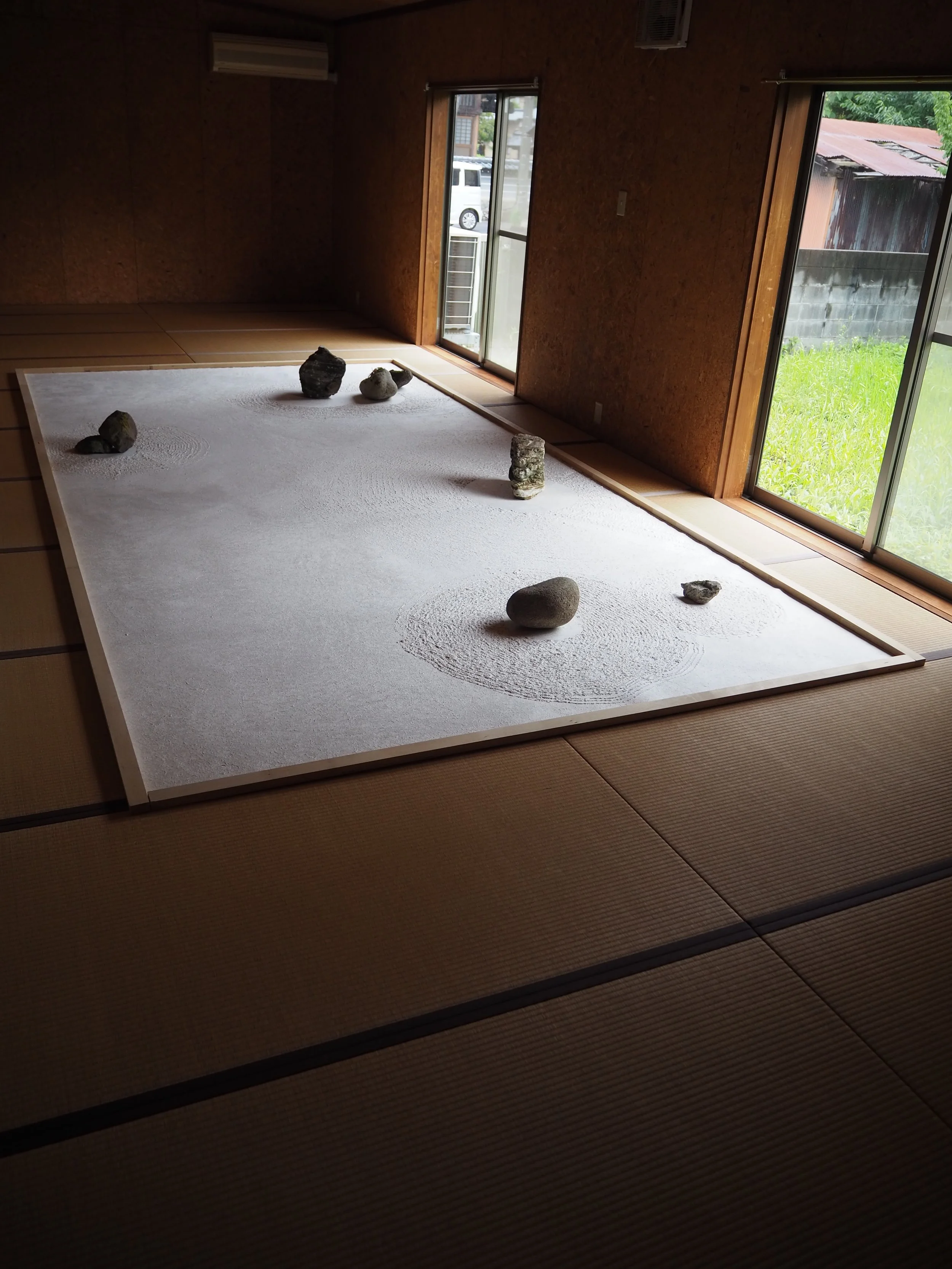
Paper handmade by the artist (kozo, hemp), cedar, stone
In paper artisan circles, the word omote is a reference to the slightly more textured side of the paper that touches the air when it is being dried, in contrast to the smooth side facing a drying board or a hot plate (called ura). In Japanese culture, though, omote also references the outward image of something or someone. In Japan, rock gardens distill nature into convenient viewing windows, and show nature’s outward beauty, but little of its volatility. The base of this artwork was made with handmade paper. The relief patterns drawn into the wet pulp show movement, time, and precision akin to the ripples of a body of water, or the raked sand of a rock garden. Viewers could sit around this installation on the tatami and ponder its representation, as well as what may lie within.
The paper for this work was made by the artist at the Igarashi Paper Mill with the Igarashi family, dear friends and colleagues — their mill is not far from this exhibition space. The wood for the frame was provided by a local papermaking tool craftsman, Kiuchi-san, who lives down the street from that paper mill. And the stones were discarded from a mountainside construction zone, a short walk away. It was important to use materials and work with people in the immediate radius of where this work was being shown, to truly root — and maintain — the work within the community.
This installation was shown at the current Mi-Lab Mokuhanga Innovation Residency, formerly the Yamatoya Gallery (Japan). The installations ura and hikari are related artworks and were shown within the same structure.